
Running a small business in 2026 means managing multiple responsibilities simultaneously—customer inquiries, lead follow-ups, appointment scheduling, and support tickets can quickly overwhelm your team. This is where AI chatbots for small business come into play.
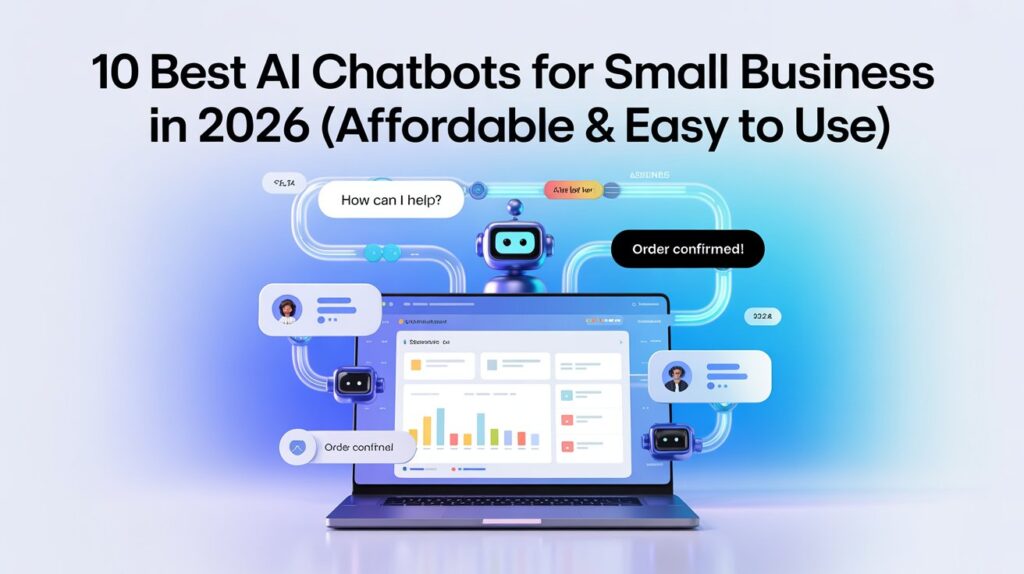
Modern AI chatbots have evolved far beyond simple automated responses. They now use advanced natural language processing to understand context, provide personalized solutions, and handle complex customer interactions. Whether you’re managing an e-commerce store, running a service-based business, or offering digital products, the right chatbot can transform how your business operates.
The best part? Implementing a chatbot doesn’t require a massive budget anymore. Many affordable and easy-to-use AI chatbot solutions are designed specifically for small business owners who need powerful automation without the complexity.
In this guide, we’ll explore ten of the best AI chatbots for small businesses, covering their features, pricing, and how they can help you:
- Handle customer support 24/7
- Generate and qualify leads automatically
- Automate sales processes
- Reduce workload on your team
- Improve overall customer experience
By the end of this article, you’ll understand which chatbot solution works best for your specific business needs.
What Is an AI Chatbot for Small Business?
An AI chatbot is a software application that simulates human conversation using artificial intelligence and natural language processing (NLP). Rather than requiring customers to navigate complex menus, chatbots understand what customers are asking and respond with relevant, helpful information.
How AI Chatbots Work:
AI chatbots operate through a combination of machine learning algorithms and predefined rules. They analyze user input, interpret intent, and generate appropriate responses. Some chatbots learn from interactions, becoming smarter over time. Others are trained on your specific data—like FAQ documents or product information—to provide accurate, brand-specific answers.
Common Use Cases for Small Businesses:
- Website support: Answer visitor questions instantly
- E-commerce assistance: Help customers find products and complete purchases
- Appointment booking: Schedule meetings without manual back-and-forth emails
- Lead qualification: Ask qualifying questions and collect contact information
- FAQ automation: Provide instant answers to frequently asked questions
- Customer service: Handle complaints and support requests 24/7
Small businesses benefit most from chatbots because they free up limited team resources. Instead of your team spending hours answering repetitive questions, an AI chatbot handles them instantly, allowing your team to focus on strategy, creative work, and complex customer issues that require human expertise.
Key Benefits of Using AI Chatbots
24/7 Customer Support
Your customers don’t operate on a 9-to-5 schedule. Time zones, after-hours inquiries, and holiday questions shouldn’t go unanswered. An AI chatbot responds to customer questions instantly, at any hour, providing immediate support that improves satisfaction and reduces support backlog.
Save Time and Reduce Workload
Repetitive questions consume significant team time. An AI chatbot handles common queries automatically, allowing your support team to focus on complex issues that genuinely need human intervention. This efficiency boost can reduce support costs by 30-50%.
Increase Sales and Leads
Chatbots guide website visitors through your sales funnel in real-time. They can recommend products, answer objections, collect email addresses, and even initiate conversations with high-intent visitors—all automatically. Studies show businesses using chatbots see 10-20% improvement in lead quality.
Affordable Automation
Unlike hiring additional support staff or outsourcing your customer service, chatbots offer cost-effective automation. Many solutions offer free plans or start at $15-30 per month, making them accessible for startups and bootstrapped businesses.
Improve Customer Experience
Modern chatbots provide personalized, conversational interactions that feel natural. When customers feel understood and get instant answers, they’re more likely to stay engaged, complete purchases, and recommend your business to others.
How We Selected the Best AI Chatbots
Our review of the best AI chatbots for small business considered these criteria:
- Affordability: Pricing structures accessible to small business budgets
- Ease of use: Minimal setup time, intuitive interfaces for non-technical users
- Integration options: Compatibility with popular tools (Shopify, WordPress, CRM platforms)
- Automation capabilities: Advanced features that scale with your business
- Customer support quality: Responsive help and comprehensive documentation
- User reviews and reliability: Real-world feedback from actual users
- AI intelligence: Natural conversations and accurate response accuracy
Quick Comparison Table: Best AI Chatbots 2026
| Chatbot | Best For | Free Plan | Starting Price |
|---|---|---|---|
| ChatGPT | General AI automation | Yes | Free/Paid |
| Tidio | E-commerce stores | Yes | $29/month |
| Intercom | Customer engagement | No | Custom pricing |
| Drift | Sales automation | No | Custom pricing |
| Chatbase | Custom knowledge bases | Yes | Low-cost paid tier |
| Botpress | Advanced customization | Yes | Paid tiers |
| Freshchat | Customer support | Yes | $19/month |
| ManyChat | Social media automation | Yes | $15/month |
| Landbot | No-code builders | Yes | Paid plans |
| Ada | Enterprise automation | No | Premium pricing |
10 Best AI Chatbots for Small Business in 2026 (Detailed Reviews)
1. ChatGPT
Best for: Content generation, general-purpose AI assistance, and automation workflows
ChatGPT stands as one of the most versatile AI tools available. While not traditionally a dedicated chatbot platform, businesses use it for content creation, customer response drafting, and automated workflow design.
Key Features:
- Highly intelligent conversational AI
- Content writing and copywriting assistance
- Integration with Zapier for automation
- API access for custom implementations
Pros:
- Advanced natural language understanding
- Completely free tier available
- Extensive knowledge base
- Excellent for content-heavy businesses
Cons:
- Requires manual implementation for business workflows
- Not purpose-built for customer support
- Free tier has usage limitations
Pricing: Free tier available; ChatGPT Plus at $20/month
Best Use Case: Content teams, marketing departments, and businesses needing general AI assistance
2. Tidio
Best for: E-commerce stores and small business websites with high customer volume
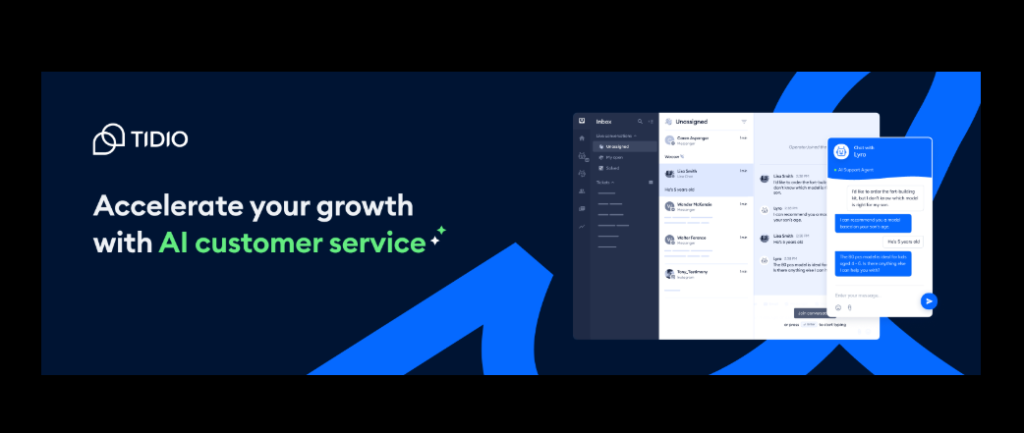
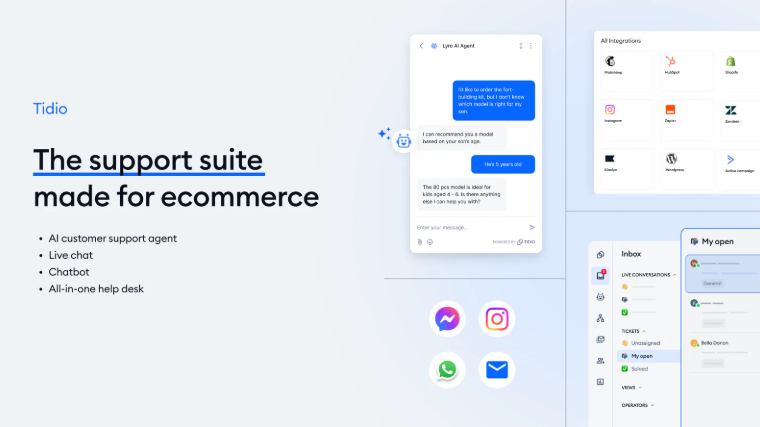
Tidio combines live chat and AI chatbot capabilities in one intuitive platform. Its Lyro AI feature handles customer conversations automatically while seamlessly escalating to human agents when needed.
Key Features:
- AI chatbot (Lyro) trained on your website content
- Live chat functionality
- Pre-built templates for common industries
- Shopify, WooCommerce, and WordPress integration
- Visitor tracking and analytics
Pros:
- Easiest setup among dedicated chatbot platforms
- Excellent customer support
- Great for beginners
- Affordable pricing with generous free tier
Cons:
- Limited customization for advanced users
- Analytics could be more detailed
Pricing: Free plan available; paid plans start at $29/month
Best Use Case: E-commerce stores, SaaS companies, and service-based businesses needing fast implementation
3. Intercom
Best for: Customer engagement automation and support personalization
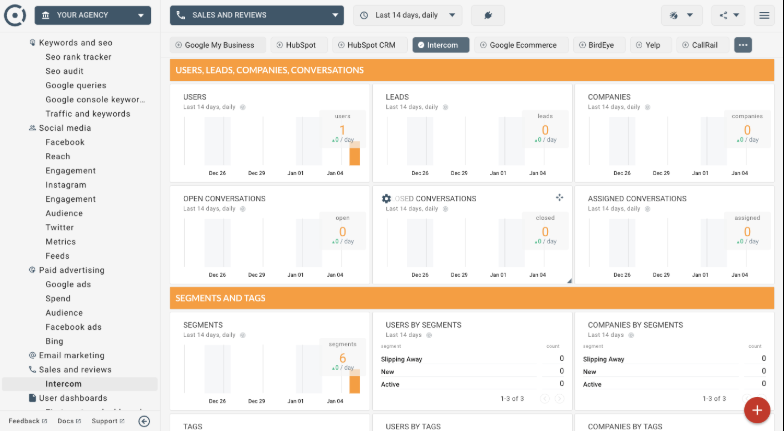
Intercom provides a comprehensive customer support platform with AI-powered responses. It excels at creating personalized customer journeys based on user behavior and history.
Key Features:
- AI-powered support agents
- Customer segmentation and targeting
- Behavior-based automation rules
- CRM integration
- Mobile app for on-the-go support
Pros:
- Highly intelligent AI responses
- Excellent for scaling customer support
- Strong analytics and reporting
- Works well for high-growth companies
Cons:
- Higher price point
- Steeper learning curve
- Overkill for very small teams
Pricing: Custom pricing; typically $100+/month
Best Use Case: Growing SaaS companies, subscription businesses, and service providers
4. Drift
Best for: Lead generation and real-time sales automation
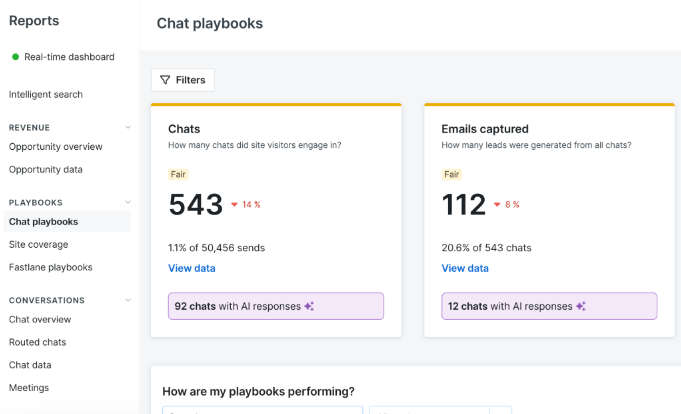
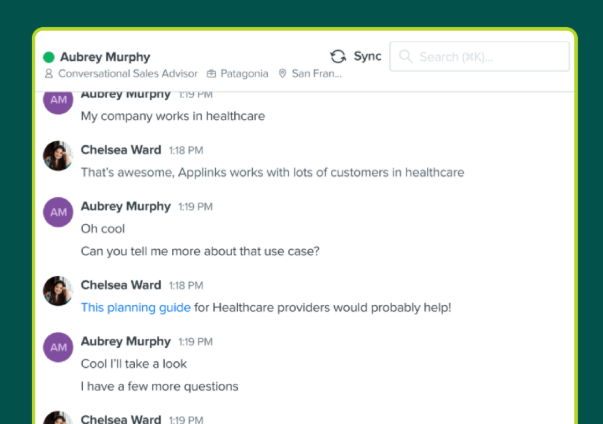
Drift specializes in real-time customer engagement with a focus on accelerating the sales process. Its chatbots capture visitor intent immediately and route conversations to the right sales team member.
Key Features:
- Real-time visitor tracking
- Lead qualification automation
- Sales pipeline integration
- Meeting booking automation
- Mobile messaging support
Pros:
- Exceptional for lead generation
- Reduces sales cycle length
- Great mobile experience
- Strong integration with sales tools
Cons:
- Premium pricing
- Best suited for B2B sales models
- May be excessive for small service businesses
Pricing: Custom pricing; enterprise-focused
Best Use Case: B2B SaaS companies, agencies, and businesses with complex sales processes
5. Chatbase
Best for: Creating custom AI chatbots trained on your unique data
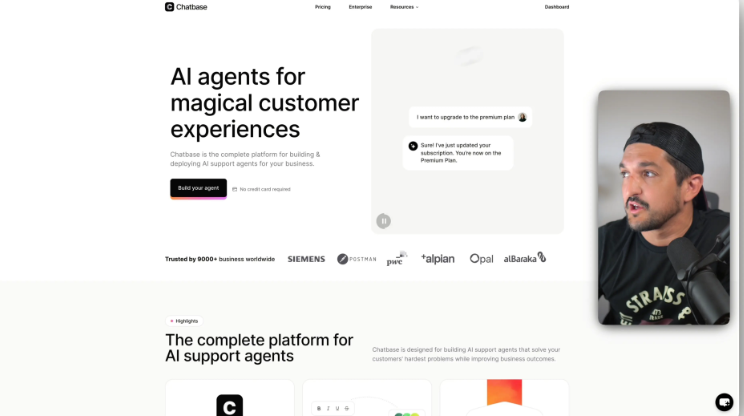
Chatbase lets you upload documents, PDFs, or website content to train an AI chatbot specific to your business. It’s perfect for creating knowledge base chatbots without coding.
Key Features:
- Upload and train on your own documents
- No-code chatbot creation
- Website scraping for content training
- Embeddable chatbot widget
- Chat history and analytics
Pros:
- Incredibly easy to set up
- Perfect for FAQ automation
- Affordable pricing
- Great for service-based businesses
Cons:
- Limited advanced features
- Training accuracy depends on source material quality
- May need fine-tuning
Pricing: Free tier available; paid plans start at affordable rates
Best Use Case: Consultants, professional services, and educational businesses
6. Botpress
Best for: Advanced, customizable AI chatbots for developers and technical teams
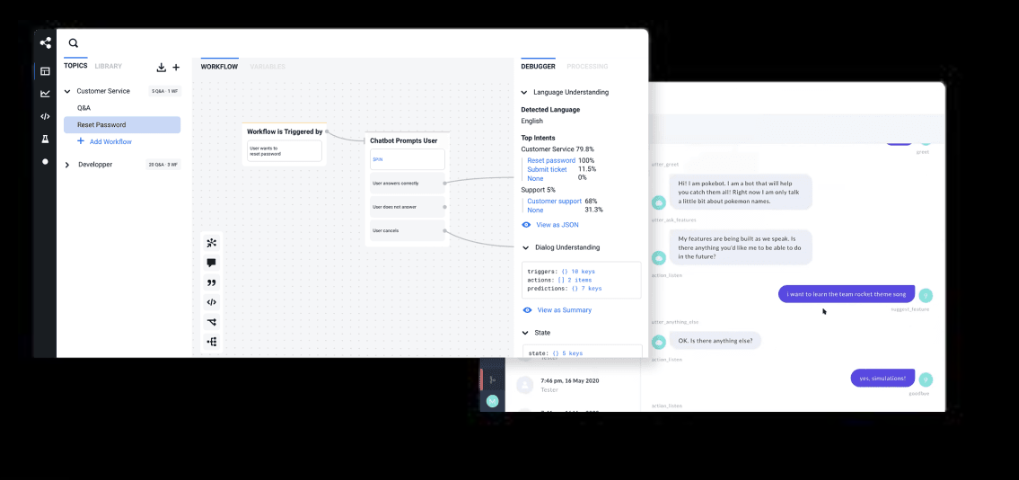
Botpress provides a developer-friendly platform for building sophisticated, multi-channel chatbots. It’s ideal if you need more control and customization.
Key Features:
- Visual flow builder for non-coders
- API access for developers
- Multi-channel deployment (web, Slack, Teams, etc.)
- NLU training capabilities
- Webhooks and custom integrations
Pros:
- Highly customizable
- Supports complex conversation flows
- Active developer community
- Good documentation
Cons:
- Steeper learning curve
- Requires technical knowledge for advanced features
- Setup takes longer
Pricing: Free tier available; paid plans vary
Best Use Case: Tech-savvy businesses, software companies, and agencies building solutions for clients
7. Freshchat
Best for: Customer service automation with omnichannel messaging
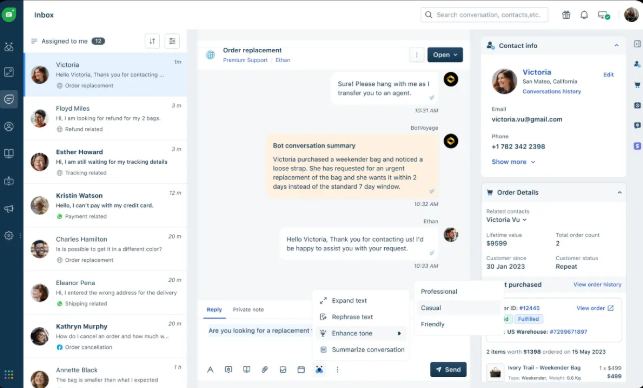
Freshchat delivers unified customer communication across channels—website, app, email, SMS, and social media—with AI-powered assistance on all platforms.
Key Features:
- Omnichannel messaging
- AI-powered response suggestions
- Pre-built conversation templates
- Team collaboration tools
- CRM integration
Pros:
- Affordable pricing
- Excellent for scaling customer support
- Intuitive user interface
- Good free tier
Cons:
- Fewer advanced AI features
- Less customization than competitors
- Analytics could be more robust
Pricing: Free plan available; paid plans start at $19/month
Best Use Case: Customer support teams, e-commerce businesses, and growing startups
10 Best Free AI Interior Design Tools for Beginners in 2026 (Tested & Reviewed)
8. ManyChat
Best for: Social media marketing automation via Facebook Messenger and Instagram
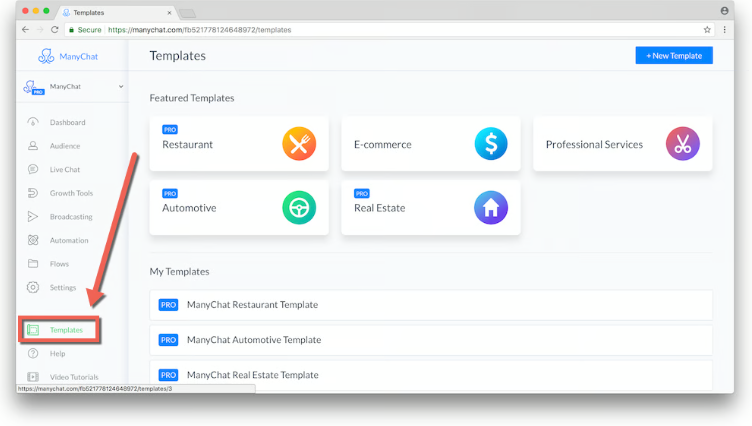
ManyChat specializes in automating customer conversations through social platforms, making it ideal for businesses relying on social media for customer engagement.
Key Features:
- Facebook Messenger automation
- Instagram direct message automation
- SMS marketing integration
- Broadcast messaging
- Customer segmentation
Pros:
- Perfect for social media-first businesses
- Affordable and straightforward
- Excellent for ecommerce promotions
- Good for building customer lists
Cons:
- Limited to social platforms
- Less traditional AI intelligence
- Best for marketing, not general support
Pricing: Free plan available; paid plans start at $15/month
Best Use Case: E-commerce businesses, digital marketers, and social media-focused companies
9. Landbot
Best for: No-code chatbot creation with a visual drag-and-drop builder
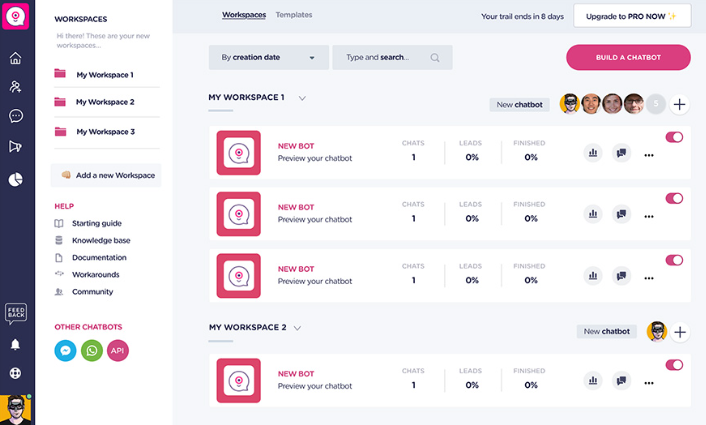
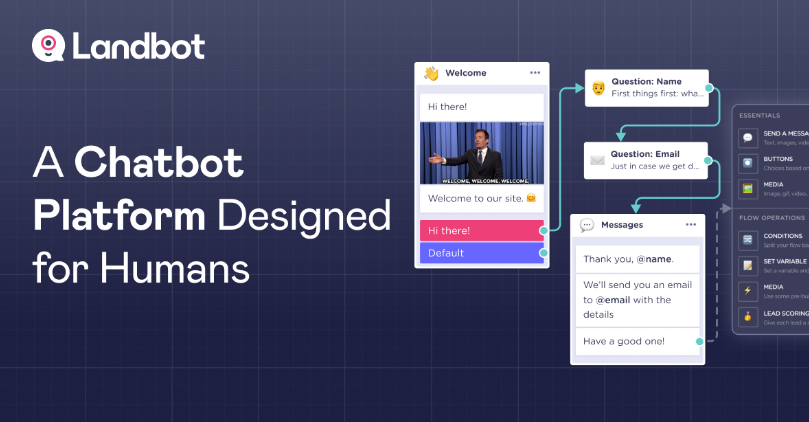
Landbot empowers non-technical users to create sophisticated chatbots through an intuitive visual interface. No coding required.
Key Features:
- Drag-and-drop builder
- Pre-built templates
- Conditional logic for smart conversations
- Lead qualification flows
- Integration with email and CRM tools
Pros:
- Extremely user-friendly
- Fast implementation
- Good template library
- Works well for campaigns
Cons:
- Less AI intelligence than competitors
- Limited customization
- Better for simple workflows
Pricing: Free tier available; paid plans available
Best Use Case: Marketing teams, agencies, and non-technical business owners
10. Ada
Best for: Enterprise-level customer service automation
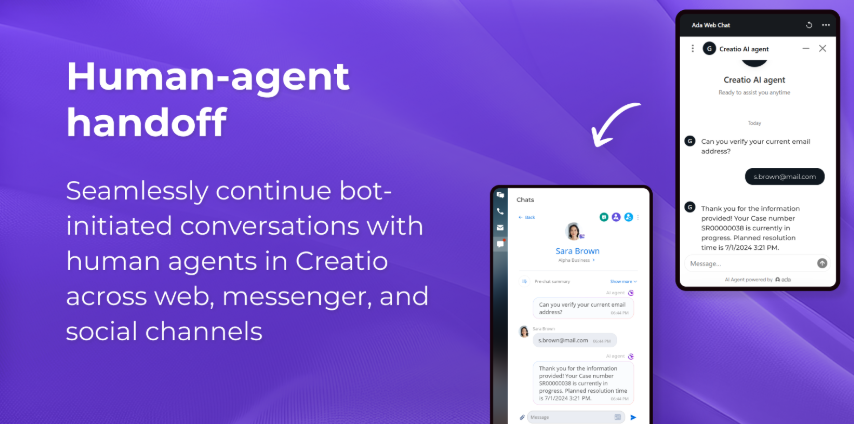
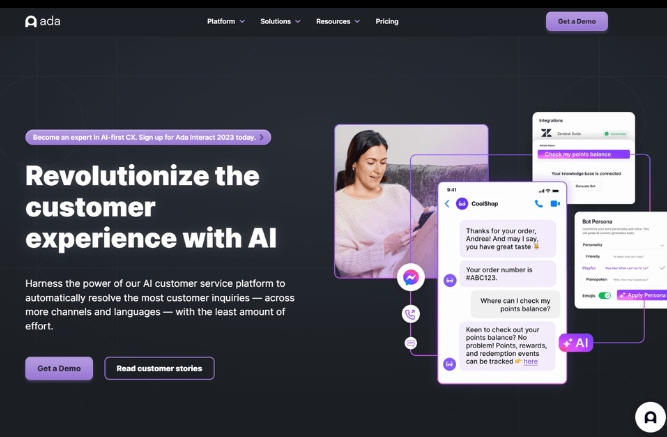
Ada delivers AI-powered customer service at scale, handling complex support scenarios with sophisticated natural language understanding.
Key Features:
- Advanced AI training
- Multilingual support
- Sentiment analysis
- Integration with major CRM platforms
- Enterprise security and compliance
Pros:
- Highly intelligent responses
- Excellent for large-scale operations
- Strong compliance features
- Great for enterprise support
Cons:
- Premium pricing
- May be overkill for small businesses
- Complex onboarding
Pricing: Premium pricing; custom quotes
Best Use Case: Large enterprises, multinational companies, and businesses requiring advanced compliance
How to Choose the Right AI Chatbot for Your Business
Selecting the right chatbot depends on understanding your specific needs. Consider these factors:
Business Size and Team Capacity: Small teams benefit most from easy-to-implement solutions like Tidio or Chatbase. Larger teams might justify the complexity of Intercom or Ada.
Your Budget: Determine if you can afford premium solutions or need a free option. Many excellent chatbots offer free tiers—test them before committing to paid plans.
Integration Requirements: Ensure the chatbot integrates with tools you already use. E-commerce businesses need Shopify compatibility; sales teams need CRM integration.
Specific Automation Needs: Do you primarily need customer support, lead generation, social media automation, or knowledge base assistance? Match the tool to your primary use case.
Technical Capability: Non-technical founders should choose intuitive platforms with good templates. Technical teams can leverage developer-friendly options like Botpress.
Free vs Paid AI Chatbots: Which Is Better?
Advantages of Free Plans:
Free chatbots let you test the platform before investing money. You can evaluate the AI quality, ease of use, and whether it actually improves your operations. For very small businesses with minimal support volume, free tiers often provide sufficient functionality.
When to Upgrade to Premium:
Once your business reaches a certain customer volume, free limitations become apparent. Premium tiers offer faster response times, more integrations, advanced analytics, and better AI training capabilities. Expect to upgrade when free tier limitations hinder your growth—typically when handling 100+ monthly conversations.
AI Chatbot Trends for Small Businesses in 2026
AI-Powered Customer Support: Chatbots now handle complex inquiries, not just simple FAQs. They understand context, sentiment, and customer frustration levels.
Voice AI Chatbots: Voice-activated chatbots are becoming standard, allowing customers to interact naturally without typing.
Omnichannel Automation: Customers expect consistent experiences across website, email, SMS, and social platforms. Unified chatbot platforms handle this seamlessly.
Personalized AI Conversations: Modern chatbots track customer history and tailor responses individually, creating more satisfying interactions.
Pros and Cons of AI Chatbots
Key Advantages:
- Cost-effective compared to hiring support staff
- Available 24/7/365
- Handles unlimited simultaneous conversations
- Improves response time dramatically
- Collects valuable customer data
- Scales effortlessly with business growth
Legitimate Limitations:
- Initial setup and training require time investment
- Sometimes misunderstands complex or unusual inquiries
- Lacks human empathy in sensitive situations
- Requires quality data for effective training
- Ongoing management and updates necessary
Frequently Asked Questions
What is the best AI chatbot for small businesses?
There’s no universal “best” option. Tidio works excellently for e-commerce, Chatbase excels for service businesses, while ManyChat leads for social media companies. Evaluate your specific needs before choosing.
Are AI chatbots expensive?
Most modern chatbots are quite affordable. Many offer free plans, and paid options typically start at $15-30 monthly. They’re significantly cheaper than hiring additional support staff.
Can AI chatbots replace human support entirely?
No. Chatbots excel at handling routine questions but lack the empathy and problem-solving ability needed for complex customer issues. The best approach combines AI automation with human support for escalated cases.
Are free AI chatbots good enough for startups?
Absolutely. Many free chatbots provide sufficient functionality for bootstrapped startups. As your business grows and free limitations affect operations, upgrade to premium tiers.
How long does it take to set up a chatbot?
Most platforms allow basic setup in 30 minutes to 2 hours. More sophisticated customization might take longer, but modern tools prioritize ease of implementation.
Final Verdict: The Best AI Chatbots for Small Business in 2026
The best AI chatbots for small business combine affordability, ease of use, and genuine customer value. Here’s our recommendation based on your business type:
For Complete Beginners: Start with Tidio or Chatbase. Both offer intuitive setup, excellent free tiers, and responsive customer support.
For E-commerce Businesses: Tidio and ManyChat are your best bets. They’re designed specifically for online stores and integrate seamlessly with Shopify and WooCommerce.
For Service-Based Businesses: Chatbase and Freshchat provide cost-effective solutions for handling appointments, answering common questions, and managing customer communication.
For Sales-Focused Teams: Drift and Intercom excel at lead generation and sales automation, though at a premium price point.
For Future Growth: Choose a platform offering scalability. As your business grows, you’ll need better analytics, advanced AI training, and sophisticated integrations.
The bottom line? Implementing an AI chatbot is no longer optional for competitive small businesses. Choose the solution that matches your current needs and budget, knowing you can upgrade as your business scales. The right chatbot will save your team hours weekly while improving customer satisfaction—a win-win investment for modern small business success.
Ready to implement a chatbot? Start with a free trial today. Most platforms offer 14-30 day free trials with full feature access. Test the solution with your actual customers to experience real value before committing financially. Your future self—and your customers—will thank you.
